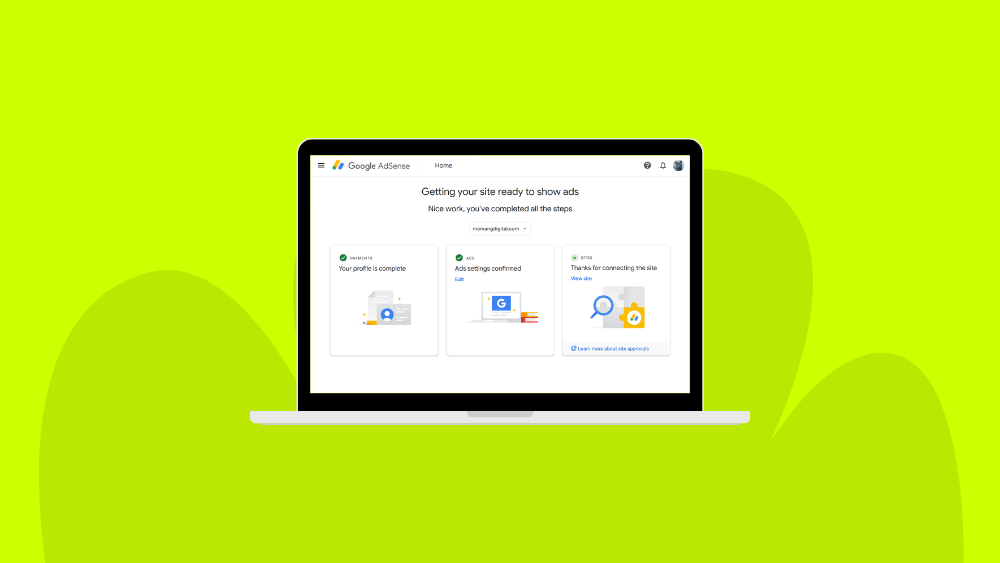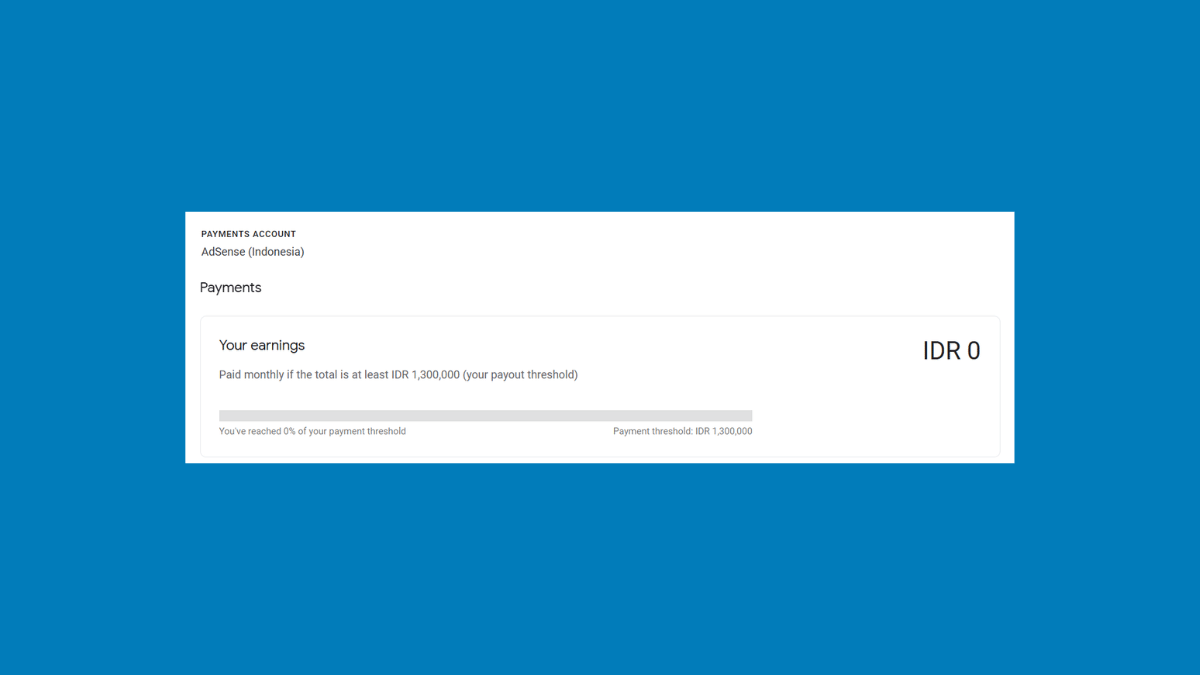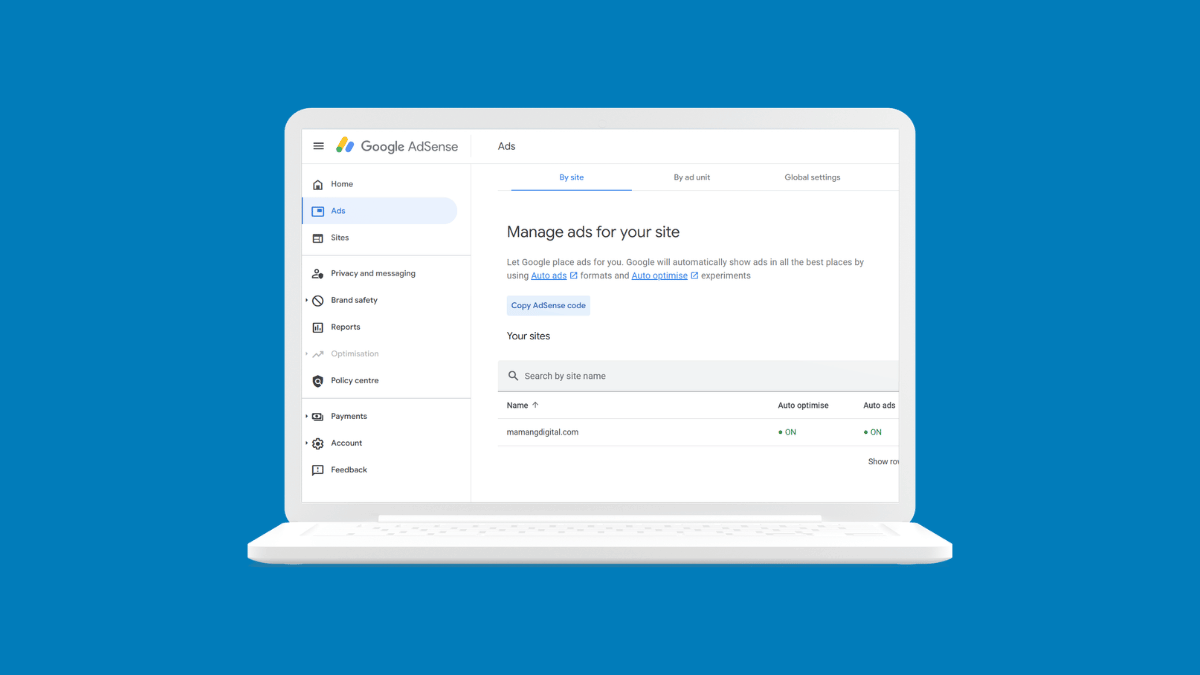

I submitted mamangdigital.com to Google AdSense feeling fairly sure it would pass. The site had more than forty articles, most of them well past 1,500 words, all of them with headings, tables and images. A few days later the answer came back, and my site was not ready to show ads.
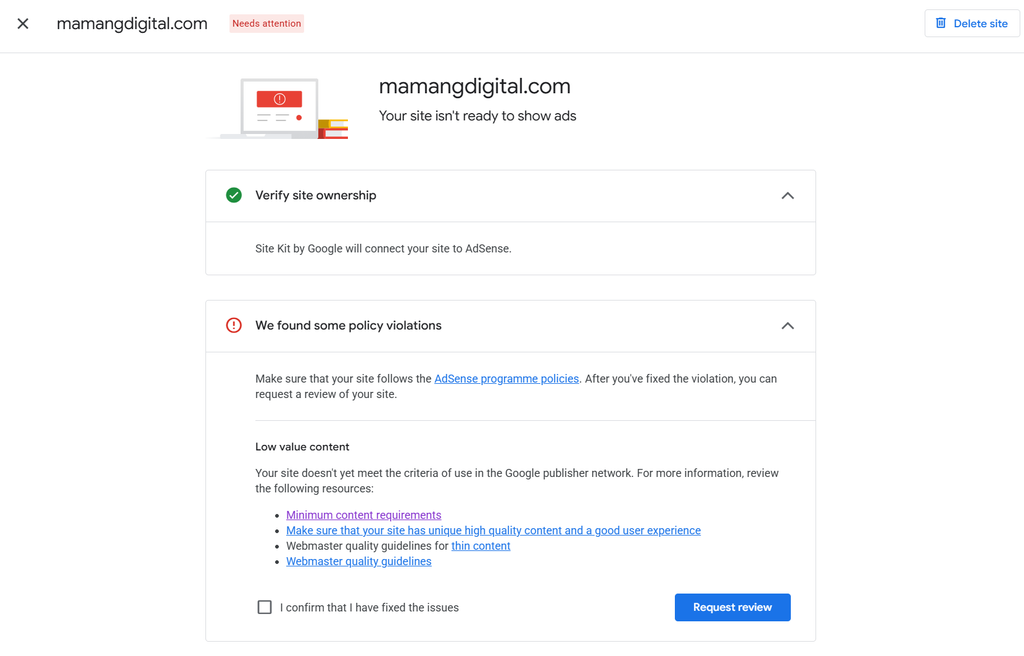
The reason was low value content. If you have had the same message land in your account, you already know how vague it feels and how little it actually tells you about what to fix.
I spent the first hour sure it was a mistake
My honest reaction was that Google had made an error. None of my articles were short. Some were close to 3,000 words. I had a privacy policy, a contact page, and an about page with my real name on it. Every checklist I had ever read said those were the things that counted, and I had all of them.
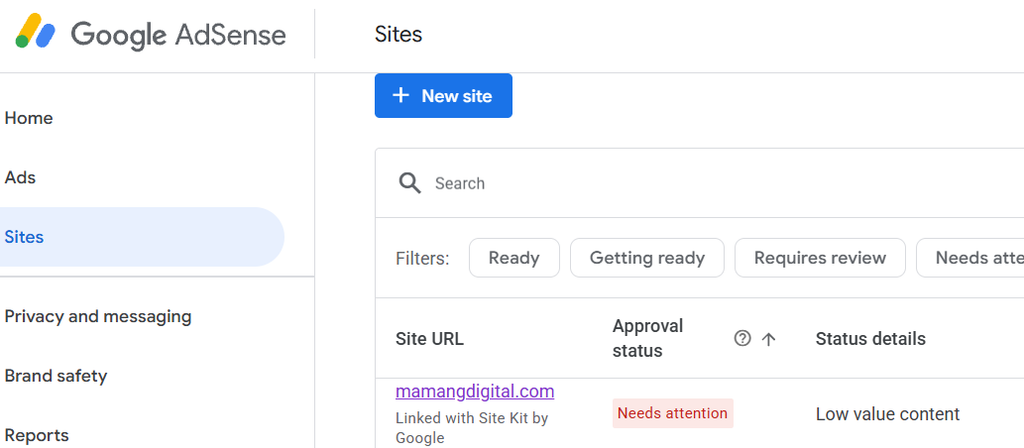
So I went and read the policy pages Google points you to, and it slowly sank in. Low value content has very little to do with how long your articles are or which pages you have. It is Google’s way of saying that the site as a whole does not yet give anyone a reason to pick it over everything already out there. After that I stopped defending the site and started looking at it the way a stranger would.
The first thing I found was embarrassing
Inside my own guide about adding a site to AdSense there was a sentence I had never finished. It still had a note to myself sitting in the middle of it, wrapped in brackets, reminding me to add a link or remove the line. It had gone out like that, live on the site, for anyone to read.
One careless sentence will not get a site rejected by itself. But it says something about everything around it. It says the articles were pushed out fast and nobody read them back before publishing. If I could miss something that obvious, a reviewer is right to wonder what else slipped through.
The bigger problem was harder to admit
When I started reading my own articles as a visitor rather than the person who wrote them, the real issue was hard to miss. They were all correct. They were all easy to read. And every one of them was something anybody could have written.
How to register for AdSense. How to submit a sitemap. How to speed up WordPress. Each one was a topic already covered by thousands of sites in almost exactly the same way. Not one of my articles had a screenshot from my own account, a real figure from my own site, or anything a reader could not find somewhere with a bigger name attached. The problem was never that the articles were too short. It was that any of them could be swapped for someone else’s and no one would notice.
What I am doing about it
I deleted the placeholder, which took about thirty seconds and should have happened months earlier.
The real change is how I write from now on, and this post is the start of it. Instead of explaining how AdSense works in general, I am telling you what happened to my own site, using my own screenshots of the actual rejection. That is the one thing the thousands of other guides cannot copy, because it happened to me and not to them.
I am also not rushing to click request review. Sending a site back over and over with almost nothing changed is a good way to be taken less seriously. I would rather make the changes real and give Google time to crawl the site again before I ask anyone to look.
Where things stand
I will be straight about where this is right now. As I write this, the site is still not approved. I have not asked for another review yet, because I want the changes to be real before I do. When I get a decision, whichever way it goes, I will come back and update this post with what actually happened.
If you are looking at the same low value content message right now, the thing I wish someone had told me on the first day is that it is usually not about length at all. It is about whether your site holds anything that could only have come from you.