Your blog is set up, your niche is chosen, and now you are staring at a blank screen with a blinking cursor, and it is somehow more intimidating than all the technical setup combined. Writing that very first post is where a lot of new bloggers freeze, convinced it has to be brilliant. It does not. It just has to exist.
Here is a freeing truth most guides bury: your first blog post will probably not be your best, and that is completely fine. Nearly every successful blogger looks back at their early posts and winces. What matters is that you write it, publish it, and learn. This guide walks you through how to write a first post you can be proud enough of to hit publish, without drowning in perfectionism.
If you have not set things up yet, our guide on how to start a blog covers that groundwork. This article assumes your blog exists and focuses entirely on writing the post itself.
Choosing What Your First Post Should Be About
Before writing a word, you need a topic, and the first post trips people up because they think it has to introduce themselves or their whole blog. It does not. A “welcome to my blog, here is who I am” post is one of the most common beginner mistakes, because almost no one searches for that, so almost no one ever reads it.
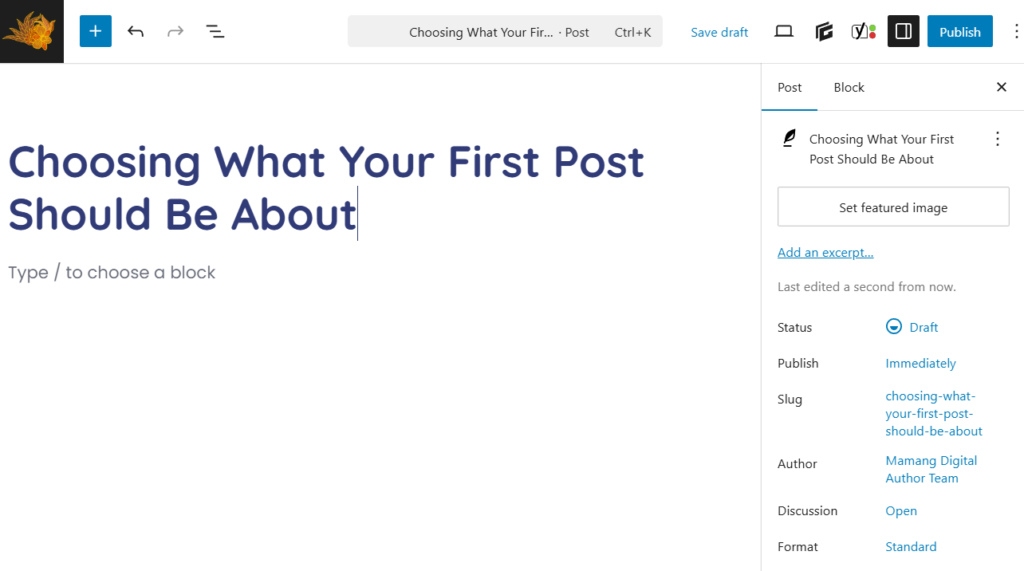
Instead, make your first post a genuinely useful piece that answers a real question in your niche. Think about what a beginner in your topic struggles with, or a question you get asked often, and answer it well. This gives your post a reason to be found later, gives readers immediate value, and sets the helpful tone your whole blog will follow.
A simple way to find a good first topic: type a broad phrase from your niche into Google and look at the autocomplete suggestions and the “people also ask” box. Those are real questions real people type. Picking one specific, answerable question from there is a far stronger first post than an introduction nobody searched for.
Start With a Simple Outline
The blank page is intimidating because you are trying to think and write at the same time. An outline separates those two jobs, and it is the single biggest thing that makes writing easier. Spend a few minutes planning before you write a full sentence.
Your outline does not need to be fancy. Jot down the main points you want to cover, in a rough order that makes sense, and those points become your section headings. For a how-to post, the steps are your outline. For a question, the parts of the answer are your outline. Once you can see the skeleton of the whole post, writing becomes filling in sections rather than facing an empty void.
A helpful research step: look at the posts already ranking for your topic and notice what points they all cover. Those recurring points are things readers expect, so make sure you include them, then look for something they all miss that you can add. That is how you make your post genuinely worth reading rather than a copy of what already exists.
Writing an Introduction That Keeps People Reading
Your introduction decides whether someone stays or leaves. You do not need clever wordplay; you need to quickly show the reader they are in the right place. The most reliable way is to open on the exact problem or question they came with.
A simple, effective structure is to name the reader’s problem, show you understand it, and promise what the post will help them do. Skip the long throat-clearing, the dictionary definitions, and the “in today’s world” openings that say nothing. If your topic is fixing a slow website, do not open with the history of the internet; open with the frustration of watching a page crawl while visitors leave. Meet readers where they are, immediately.
One practical tip: many writers find the introduction easiest to write last, after the body exists and they know exactly what they are introducing. If the opening is blocking you, skip it, write the meat of the post, and come back. Do not let the first paragraph hold the whole post hostage.
Writing the Body: Make It Easy to Read
With your outline as a guide, write the main content section by section. The single most important thing for online writing is readability, because people skim. A wall of text sends readers running, no matter how good the information is.
Keep your paragraphs short, often just two or three sentences. Use clear headings so people can scan and find what they need. Break up information with the occasional list where it fits, and add an image or two to give the eyes a rest. Write the way you would explain something to a friend, in plain language, not stiff formal prose. The goal is not to sound impressive; it is to be clear and genuinely helpful.
Do not obsess over length. You will see advice insisting on a thousand words or more, but a post should be as long as it needs to be to answer the question well, and no longer. Padding a short answer to hit a word count makes it worse, not better. Cover the topic properly, then stop.
Write in Your Own Voice, Not a Robot’s
This is the part that matters most and gets mentioned least. Beginners often write in a stiff, formal, impersonal voice because they think it sounds professional. It actually sounds generic and forgettable, and it is exactly what readers and search engines are increasingly tired of.
Your real advantage is you. Your perspective, your experiences, your mistakes, your way of explaining things. A cooking blog does not need a food scientist’s lecture; it needs someone who actually cooked the dish and can say what went wrong the first time. Write like a real person talking to another real person. Share what you have actually learned. That authenticity is the one thing no one else can copy, and it is what turns a first-time reader into someone who comes back.
This matters more every year. As generic, mass-produced content floods the web, posts with real human experience stand out, both to readers who trust them and to search engines trying to reward genuine expertise. Your voice is not a nice extra; it is your core value.
Editing: The Step That Makes You Look Like a Pro
First drafts are messy, and they are supposed to be. The difference between an amateur post and a polished one is usually editing, not raw talent. So once your draft is done, do not publish immediately.
If you can, step away for a while, even just a few hours, then read it again with fresh eyes. Reading it out loud is a powerful trick, because your ear catches clumsy sentences your eye skips over. Look for anything confusing, cut words that add nothing, fix obvious typos, and make sure each section flows into the next. You are not aiming for perfection, just for clear and clean. A quick edit pass dramatically lifts the quality of any post.
A Light Touch of SEO (Without Overthinking It)
You do not need to be an SEO expert for your first post, but a few light touches help Google understand and eventually find it. Keep these simple, because forcing SEO ruins writing faster than almost anything.
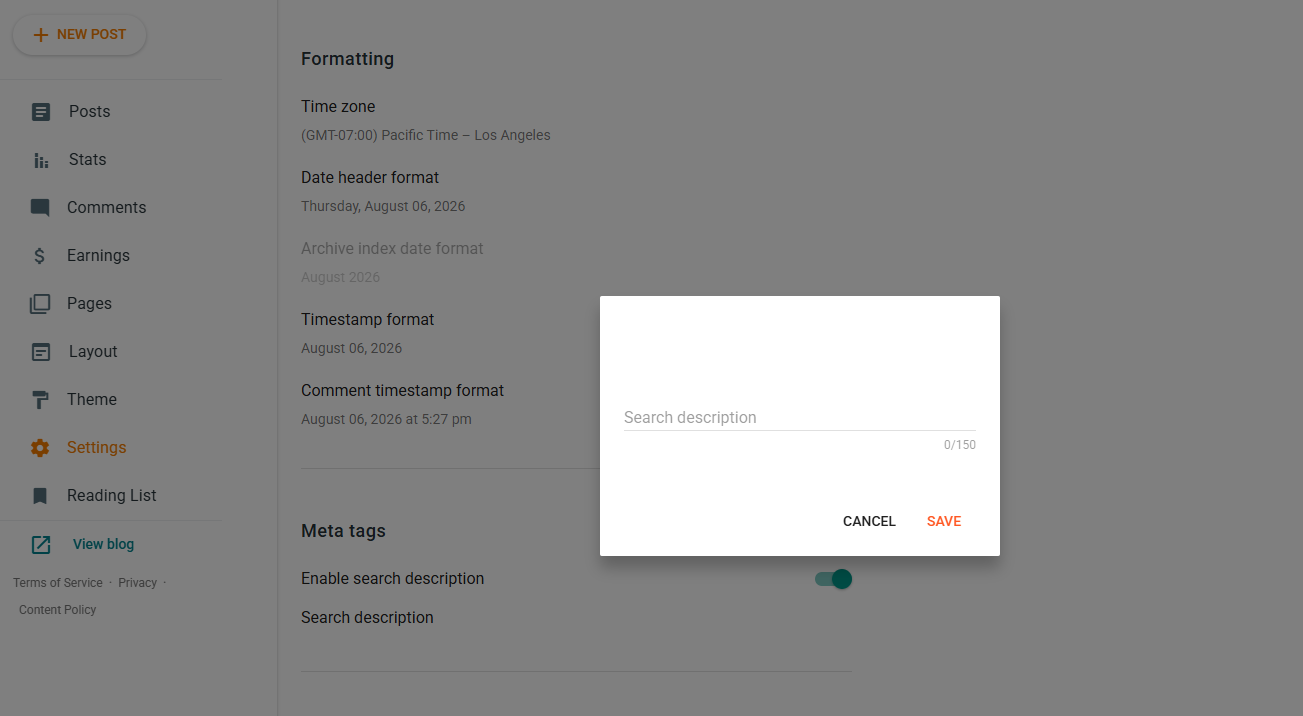
Use the main phrase people would search for naturally in your title, and a few times in the post where it genuinely fits, never forced or stuffed in awkwardly. Write a clear title that promises what the post delivers. Add descriptive text to your images. That is plenty for a first post. The deeper SEO work comes later, once writing feels comfortable, and we cover it across our SEO guides, starting with the basics of how search even finds you.
Hit Publish, Then Help People Find It
When your post is written, edited, and lightly optimized, do the hardest thing of all: publish it. Do not tweak it for the twentieth time. Done and published beats perfect and unpublished every single time, and you will improve far faster by shipping real posts than by polishing one forever.
But publishing is not the finish line, because a great post that no one can find helps no one. The next step is making sure search engines can discover it. Start by telling Google your blog exists, which we walk through in our guide on adding your website to Google Search Console. And if your new post does not show up in search right away, do not panic, our guide on why your website is not showing up on Google explains why that is normal at first. Write the post, publish it, then begin the real adventure of getting it found.
Frequently Asked Questions
What should my first blog post be about?
Make it a useful post that answers a real question in your niche, not a “welcome to my blog” introduction. Introductions rarely get searched or read, while a helpful answer to a genuine question gives your post a reason to be found and delivers value to readers right away.
How long should my first blog post be?
Long enough to answer the topic well, and no longer. Ignore rigid word-count rules. A focused post that fully covers a question is better than a padded one stretched to hit a number. Cover what matters clearly, then stop. Quality and clarity beat length every time.
Do I need to be a good writer to start a blog?
No. Readers value a genuine, personal voice over polished, formal prose. Writing conversationally, as if explaining to a friend, works better than trying to sound like an expert. Your real experiences and honest perspective matter far more than perfect writing, and your skills improve naturally with practice.
Should I worry about SEO in my first post?
Only lightly. Use the phrase people would search in your title and naturally in the text, write a clear title, and add descriptive text to images. That is enough at first. Forcing heavy SEO hurts your writing. The deeper optimization can come once writing feels comfortable.
How do I stop overthinking and just publish?
Accept that the first post will not be perfect, because no one’s is. Set yourself a limit, one edit pass with fresh eyes, then publish. You improve by shipping real posts and learning, not by endlessly polishing one. A published imperfect post beats a perfect unpublished one.